
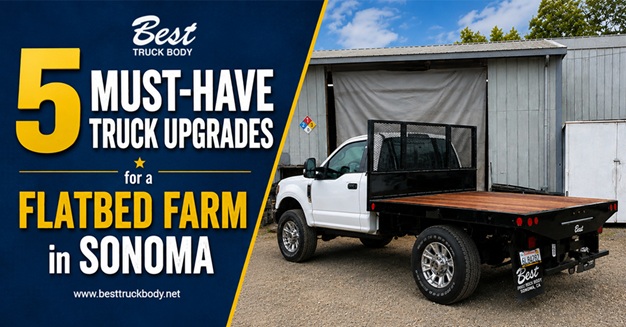
5 Must-Have Truck Upgrades for a Flatbed Farm in Sonoma
Running a successful agricultural operation requires dependable, heavy-duty machinery built to handle demanding daily workloads. For a flatbed farm in Sonoma, a properly upgraded work vehicle optimizes daily harvest transport, safely secures bulky farming equipment, simplifies bulk material handling, and prevents expensive mechanical downtime.
By implementing specialized commercial truck modifications, local agricultural businesses can directly increase field productivity, ensure worker safety during loading cycles, and protect valuable seasonal crops from transport damage.
Understanding the Role of a Work Truck Bed
A truck bed is one of the hardest-working components on a commercial vehicle. It handles heavy loads, constant movement, harsh weather, and demanding job site conditions. Over time, this exposure creates wear that can affect safety, efficiency, and overall performance—whether you are hauling debris, construction materials, landscaping products, or aggregate loads.
For independent farmers and regional fleet operators in Northern California, a truck bed must also withstand the rigorous, seasonal demands of agricultural hauling. When a bed begins to show its age, owners face a critical choice: repair the existing structure, upgrade its components, or invest in a complete replacement.
When Repairs Make Sense
Not every damaged truck bed requires a total replacement. Minor issues can often be repaired effectively while preserving the structure and extending its overall service life.
- Surface Damage: Small dents, scratches, and cosmetic damage usually do not affect performance. Professional repairs can quickly restore appearance and prevent future corrosion.
- Localized Rust: If rust is limited to a small area and has not compromised structural strength, targeted repairs and grinding can stop the problem before it spreads.
- Minor Weld Failures: Small cracks around weld points can often be re-welded without replacing major components. Early attention prevents these issues from escalating.
- Hydraulic System Issues: Sometimes the problem is mechanical rather than structural. Hydraulic components, hinges, or lifting mechanisms may require service while the bed itself remains perfectly sound.
Signs Replacement or Upgrade May Be the Better Option
There comes a point when repeated repairs become less practical and add up quickly without addressing deeper structural concerns.
Extensive Corrosion
Rust that has spread across large sections of the bed weakens the metal and significantly reduces load capacity. When corrosion reaches structural frames or load-bearing components, replacement is often the safest and most reliable option.
Multiple Structural Cracks
Cracks appearing in several locations typically indicate metal fatigue throughout the entire structure. Repairing one localized area may not solve the underlying problem, risking an unexpected failure under load.
Frequent Downtime & Reduced Efficiency
If a truck is constantly returning to the shop, lost productivity quickly outpaces the cost of a new bed. Older, warped surfaces or weakened sidewalls can limit hauling capacity, slow down operations, and create safety risks for your crew.
Heavy-Duty Component Upgrades for Agricultural Fleets
If your truck bed frame is structurally sound but failing to meet the evolving demands of your operations, upgrading to specialized, field-tested components can transform your vehicle's utility.
1. Heavy-Duty Custom Stake Beds
Agricultural hauling involves transporting highly diverse payloads throughout changing seasons. A standard open flatbed works well for stacked pallets, but it cannot safely retain loose cargo, bulk produce crates, or lightweight organic materials during transport.
Installing removable steel or wooden stake sides instantly transforms an open flatbed into a secure, high-capacity cargo box. These interlocking racks slide directly into targeted stake pockets built into the perimeter of the bed frame. This gives your crew complete flexibility: keep the sides fully raised when hauling loose vineyard posts or empty harvest lugs, or remove them in less than five minutes to load wide hay bales with a forklift.
2. Premium Underbody Truck Hoist Installation
Manual unloading wastes valuable labor hours and slows down daily operations. Integrating a hydraulic lifting system beneath your existing flatbed structure instantly creates an efficient, multi-purpose dump vehicle.
An underbody hoist system remains completely concealed beneath the truck bed frame when lowered, preserving a low center of gravity and maintaining a completely flat loading surface. When activated, the heavy-duty hydraulic cylinders deliver immense lifting leverage to dump premium topsoil, gravel for vineyard roads, or organic compost in seconds.
3. Commercial Pull Tarp Systems
Wind damage and intense sun exposure can ruin delicate, freshly harvested crops during transit from the field to a processing facility. Debris flying from an uncovered truck bed also creates significant safety liabilities on public roads.
A spring-loaded pull tarp system provides an instant, durable shield for your cargo. Mounted securely at the front of the flatbed right behind the cab, the system allows an operator to extend a heavy-duty mesh or solid vinyl cover over the entire payload using a simple pull-rope or electronic switch, ensuring total compliance with highway cargo securement laws.
4. Weather-Treated Truck Bed Wood Flooring
The floor of a work truck endures relentless punishment from steel-wheeled equipment, sharp tools, and constant exposure to wet soil and fertilizers. Metal beds can also become incredibly slick when wet, creating serious slipping hazards for your field crew.
Upgrading to premium, pressure-treated tongue-and-groove wood flooring delivers exceptional durability and a naturally high-traction surface. Dense timbers absorb heavy impacts beautifully without denting or rattling like sheet metal. Industrial weatherproofing agents prevent structural wood rot, resist organic chemical warping, and stand up to frequent power-washing cycles.
Safety Note: If you are noticing soft spots, bowing, or cracking on your current haulers, it is vital to have the deck evaluated immediately to protect your crew and cargo.
5. Industrial Hitch Receivers and Toolboxes
A true agricultural workhorse needs to pull double duty by towing auxiliary equipment and keeping vital field tools organized.
- Underbody Storage Boxes: Weatherproof aluminum or steel toolboxes mounted beneath the flatbed frame utilize dead space without sacrificing cargo room. They keep expensive straps, chains, fencing tools, and replacement hardware dry and locked away securely.
- Class V Hitch Receivers: Installing a heavy-duty, frame-mounted hitch allows your truck to safely tow heavy equipment trailers, fuel tenders, or mobile harvesting platforms without damaging the rear chassis.
Key Factors to Evaluate Before Making a Decision
Before deciding whether to patch up, completely replace, or upgrade your truck bed, evaluate the following variables:
- Age of the Equipment: Older truck beds naturally experience cumulative metal fatigue. If the structure has reached the end of its natural service life, a replacement offers greater long-term value.
- Repair History: A bed that has undergone multiple structural repairs may continue developing new issues. Compare cumulative maintenance costs against the price of an upgrade.
- Operational Demands: Heavy-duty applications place significant stress on truck bodies. Vehicles used daily in demanding environments benefit from modern, stronger manufacturing techniques.
- Safety Requirements: Safety should always remain the top priority. Any damage that compromises the structural integrity of the load-bearing frame must be addressed immediately.
Short-Term Costs vs. Long-Term Value
Many truck owners focus solely on the immediate repair bill. However, a lower-cost patch job today can lead to additional downtime, future repairs, and reduced productivity tomorrow.
Modern truck body technology has improved significantly. Updated designs feature stronger materials, advanced anti-corrosion coatings, and precision engineering that support faster, safer loading and unloading. Looking at the Total Cost of Ownership (TCO) often reveals that a larger upfront investment in a replacement or major component upgrade yields years of dependable performance with dramatically lower maintenance costs.
Why Choose Best Truck Body & Trailer Repair?
For comprehensive truck, trailer, and auto service in Sonoma County, regional fleet operators and independent farmers consistently rely on our team at Best Truck Body & Trailer Repair. Since 1990, we have operated with an unwavering commitment to integrity, honesty, and superior craftsmanship from our fully equipped shop in Windsor, California.
We do not offer generic, one-size-fits-all fixes. We evaluate the unique condition of your equipment, discuss your operational workflows, and help you choose the most practical, cost-effective path forward.
- Authorized Distributors: We provide direct access to the finest hardware, liftgates, custom fabrication, and specialized hoist mechanisms from elite industry manufacturers like Rugby, Buyers, Crysteel, and Palfinger.
- Custom Fabrication Expertise: Whether you require precision collision repair, a custom flatbed dump build, structural welding, frame alterations, or a durable wood floor replacement, we deliver top-quality products tailored directly to your business goals.
Ready to Upgrade Your Agricultural Fleet?
Do not let outdated equipment slow down your seasonal operations or risk your crew's safety out in the fields. Explore our custom manufacturing models and robust service options by visiting our Home Page today to see how we can elevate your fleet's performance.
If you want to read more about maximizing your vehicle's utility, check out our professional guide on 7 Tips for a Flawless Underbody Truck Hoist Installation on our blog sections.
When you are ready to request a free estimate or discuss a custom fabrication project tailored to your business, please go to our Contact Page to submit a service inquiry online, or call our Windsor shop directly at 707-953-9742. Trust the dedicated team at Best Truck Body & Trailer Repair to maximize your vehicle's performance today!
Frequently Asked Questions
1. How do I know if my truck bed can be repaired or if it needs replacement?
The best way is through a professional inspection. Factors such as rust severity, structural frame integrity, crack locations, and overall repair history all influence whether a repair remains practical or if replacement offers better long-term value.
2. What is the best wood for flatbed farm truck floors?
We highly recommend pressure-treated apitong wood or dense oak for heavy-duty farm use because these materials offer incredible dent resistance and handle moisture well without warping.
3. Can you install a hydraulic hoist on an existing farm flatbed?
Yes, our expert fabricators can easily modify your existing flatbed frame by adding structural reinforcements and installing a premium underbody hydraulic hoist system to enable seamless dumping capabilities.
4. How long should a dump truck bed or wood floor last?
Service life varies widely depending on usage, maintenance, load types, and weather exposure. With proper care, weather sealing, and prompt minor repairs, high-quality wood and steel beds can last many years. However, floors should be replaced immediately if you notice severe splitting, structural rotting, or soft spots.
5. Do pull tarp systems operate manually or electronically?
We install both options; manual pull-tarps are cost-effective and highly reliable for individual trucks, while electric crank tarps offer ultimate operator convenience for large commercial fleets.
6. What are the weight limits for underbody truck hoists?
Weight capacities vary widely based on the specific cylinder size and design, ranging from light-duty 3-ton setups up to heavy-duty industrial configurations that lift over 20 tons safely.
7. How do stake beds help with harvesting workflows?
Stake beds allow your crew to safely stack loose boxes, vineyard posts, or large produce bins high without risking cargo spillage, yet the sides remove quickly for fast forklift unloading.
8. Should I repair truck bed damage immediately?
Yes. Small issues like localized rust, minor cracks, or minor hydraulic leaks can quickly grow into larger, much more expensive structural failures if left unaddressed. Prompt maintenance protects your investment and ensures highway compliance.
Address:
Call for Free Estimate
707-953-9742Hours:
Monday - Friday: 8:00 AM - 4:30 PM
Saturday and Sunday: Closed

Copyright © 2022 - 2026 Best Truck Body | All Rights Reserved
